


Expedition aboard the RV “Akademik V.A. Koprtyug” from 16 September to 1 October 2026
Expedition aim: To assess the quality of the surface, near-bottom, and interstitial waters in the coastal zone and to study the diversity of species, taxocenoses, and communities at the sampling sites under the influence of adverse environmental processes.
Project: “The impact of negative environmental processes in the coastal zone of Lake Baikal on the quality of interstitial, near-bottom, and shoreline water and, consequently, on the diversity of species, taxocenoses, and communities,” No. FWSR-2026-0016.
Main tasks of the expedition:
- Continuation of long-term, regular monitoring of the dynamics of biomass and species composition of filamentous macroalgae (with a focus on non-native algae of the genera Spirogyra and Oedogonium, as well as benthic cyanoprokaryotes) in the shallow zone of Lake Baikal on both a seasonal and interannual basis;
- Sample collection to examine the faunal composition of harpacticoids, ostracods, and turbellaria in the coastal and deep-water zones of Lake Baikal;
- Sample collection to assess the state of phytoplankton in the coastal zone of Lake Baikal;
- Collection of data in shoreline detritus accumulations (SDA) in areas with large-scale stranding of aquatic vegetation as an indirect indicator of the productivity in the coastal zone of Lake Baikal;
- Collection of microbiological samples to determine water quality in the coastal zone of Lake Baikal; collection of interstitial samples to check hygiene indicator microorganisms; and additional collection of coastal and interstitial samples in areas where shoreline plant detritus has accumulated to detect secondary pollution.
Expedition participants: V.V. Malnik (deputy leader), T.M. Alekseeva (junior researcher), R.S. Krivorotkin (junior researcher), M.I. Gula (senior engineer), A.E. Poberezhnaya (engineer), R.A. Yurgin (engineer), A.S. Plotnikova, S.A. Ivanenko (technician), and O.A. Timoshkin (leader). Overlall, 9 participants, among whom 5 are under 39 years inclusive.
Sampling stations and coordinates:
- Listvyanka settlement: N51°50'43.4'' E104°52'30.9''
- Angara River source: N51°52'03.6'' E104°49'10.4''
- Baikalsk town: N51°31'19.4" E104°11'28.6"
- Slyudyanka town: N1°40'00.9" E103°43'04.6"
- Kultuk settlement: N51°43'24.3" E103°43'11.2"
- Sharyzhalgay settlement пос. Шарыжалгай: N51°44'55.1'' E103°58'58''
- Vydrino village–Cape Tolsty transect: N51°37'25.7'' E104°39'34.4''
- Bolshiye Koty settlement: N51°54'01.6" E105°03'52.2''
- Bolshoye Goloustnoye settlement: N52°01'36.8" E105°24'14.4"
- Bolshoye Goloustnoye settlement–Babushkin town transect: N51°52'00.9'' E105°38'46.0''
- Babushkin town: N51°43'13.5" E105°51'58.2"
- Selenga shallows: N52°13'36.6" E106°07'56.4"
- Aya Bay: N52°47'14.4" E106°36'12.5"
- Malye Olkhonskie Vorota Strait transect: N53°00'09.1'' E106°55'21.5''
- Sakhyurta settlement: N53°01'05.8" E106°53'13.6"
- Maloye More Strait, Ogoy Island: N53°07'27.6" E106°59'01.1"
- Khuzhir settlement: N53°11'32.5" E107°19'46.8"
- Khuzir settlement–Cape Otto-Khushun (Maloye More Strait) transect: N53°15'58.2'' E107°17'57.9''
- Kargante Bay: N53°22'57.6" E107°23'05.7"
- Kargante Bay–Cape Nyurgon transect: N53°20'05.3" E107°28'31.1"
- Cape Nyurgon: N53°17'10.8'' E107°32'50.4''
- Bolshiye Olkhonskiye Vorota Strait: N53°25'49.7'' E107°31'49.6''
- Uzury settlement: N53°19'34.6" E107°45'35.9"
- Cape Izhimey: N53°13'28.1" E107°41'04.7"
- Cape Khoboy–Cape Gorevoi Utes transect: N53°19'12.8" E108°10'42.4"
- Maksimikha settlement: N53°16'26.9" E108°43'32.5"
- Between Cape Nizhneye Izgolovie and Cape Verkhneye Izgolovie: N53°42'32.5" E108°34'33.6"
- Bolshoy Ushkany Island: N53°51'06.3" E108°39'18.2"
- Svyatoy Nos Peninsula, Cape Orlovy: N53°51'34.6" E108°55'27.5"
- Cape Shartla–Cape Malaya Cheremshanka transect: N53°56'49.2" E108°52'53.6"
- Opposite the Bolshaya Cheremshanka River: N54°00'53.6" E109°25'28.9"
- Sosnovka Bay: N54°10'50.1" E109°31'07.9"
- Cape Zavorotny–Davsha Bay transect: N54°20'21.8" E109°19'44.4"
- Cape Kabaniy: N54°37'43.8" E109°30'30.2"
- Irinda Bay: N54°50'40.5" E109°38'52.0"
- Cape Kotelnikovskiy–Cape Shegnanda transect: N54°58'29.4" E109°36'20.6"
- Cape Omagachan: N55°05'55.9" E109°43'38.7"
- Tompa settlement: N55°07'52.5" E109°43'48.9"
- Cape Tukalaragdy: N55°26'01.3'', E109°49'02.5''
- Ayaya Bay: N 55°27'16.4" E 109°54'06.4"
- Frolikha Bay: N 55°30'46.0" E 109°52'10.0"
- Cape Nemyanka–mouth of the Tyya River transect: 55°34'23.5" E 109°31'39.4"
- Cape Tyya: 55°36'39.2" E 109°21'23.4"
- Cape Kurla: N55°40'19.4" E109°26'03.9"
- Zarechny settlement: N55°35'40.1" E109°17'50.9"
- Senogda Bay: N55°34'32.6" E109°13'41.3"
- Slyudyanskaya Bay: N55°28'06.8" E109°13'41.3"
- Boguchansksya Bay: N55°26'04.6" E109°12'10.3"
- Cape Kovrizhka: N54°54'03.9", E108°55'27.5"
- Cape Elokhin: N54°32'36.8" E108°39'34.7"
- Ledyanaya River: N54°29'50.8'' E108°35'48.4''
- Cape Bolshoy Solontsovyi: N54°10'14.3" E108°22'13.1"
- Cape Pokoiniki: N54°00'32.7" E108°13'54.7"
- Cape Rytyi: N53°49'38.0" E108°02'51.5"
- Cape Orso–Cape Tolsty transect: N52°48'35.6" E106°55'16.9"
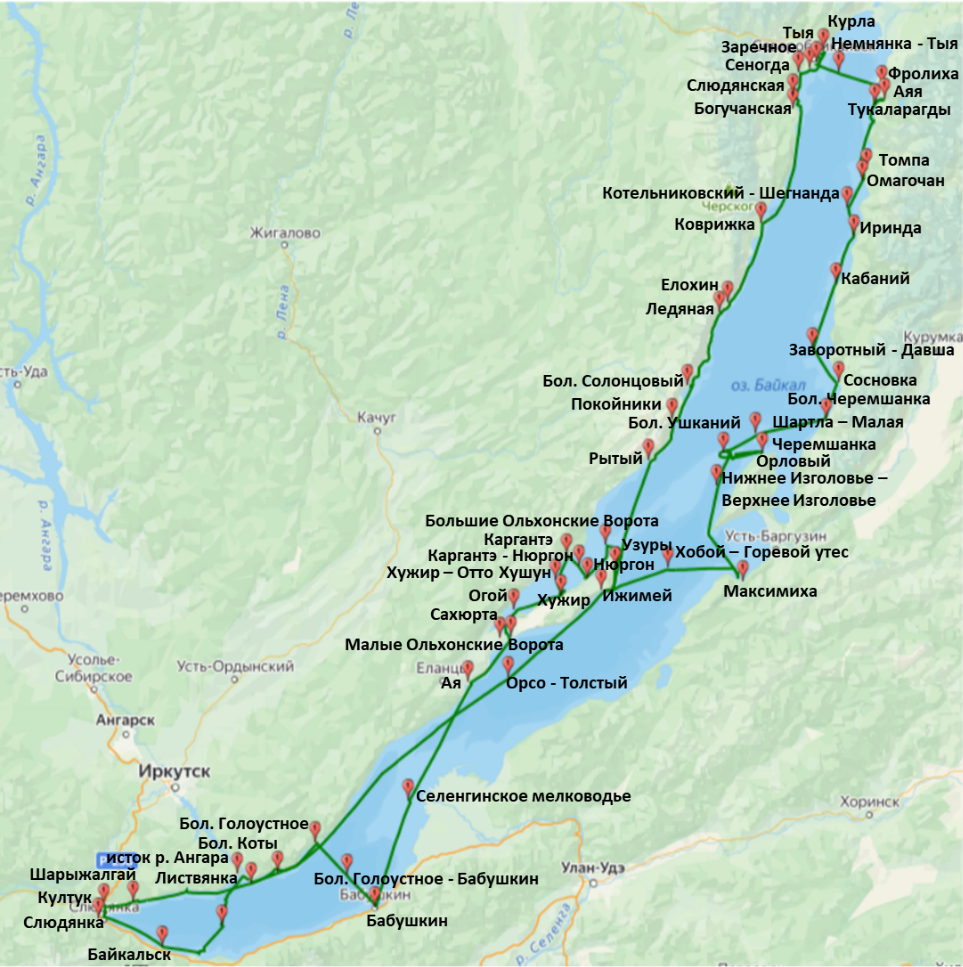
Schematic map of the expedition route:
Volume of collected material:
| Study object | Number of samples |
|---|---|
| Bacterial and pelagic microorganisms | 129 |
| Phytoplankton | 42 |
| Phytobenthos | 211 |
| Zoobenthos | 84 |
| Zooplankton | 6 |
| Shoreline detritus accumulations | 25 |
| Hydrochemistry (samples were frozen and will be analyzed later) | 74 |
Key results and brief conclusions:
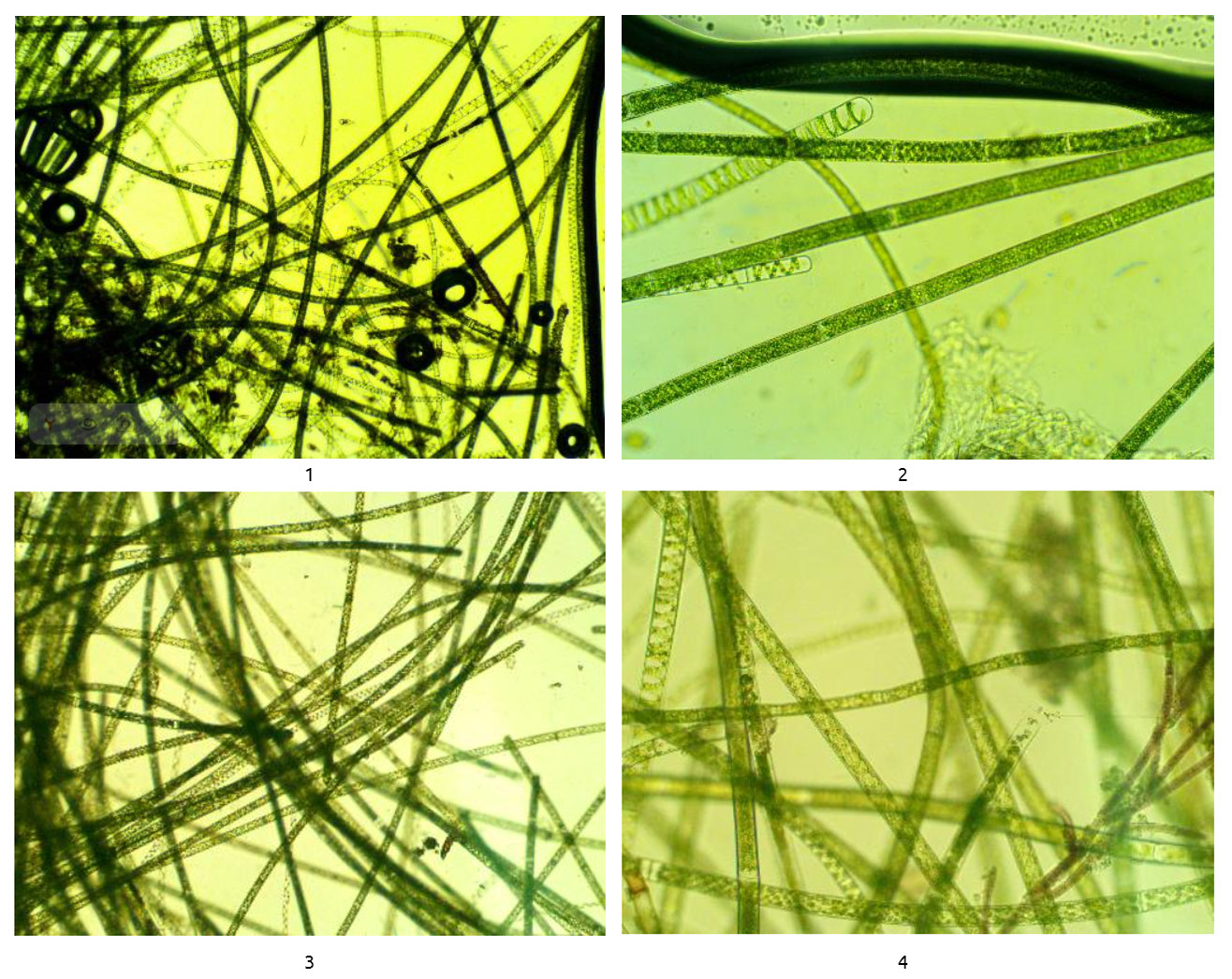
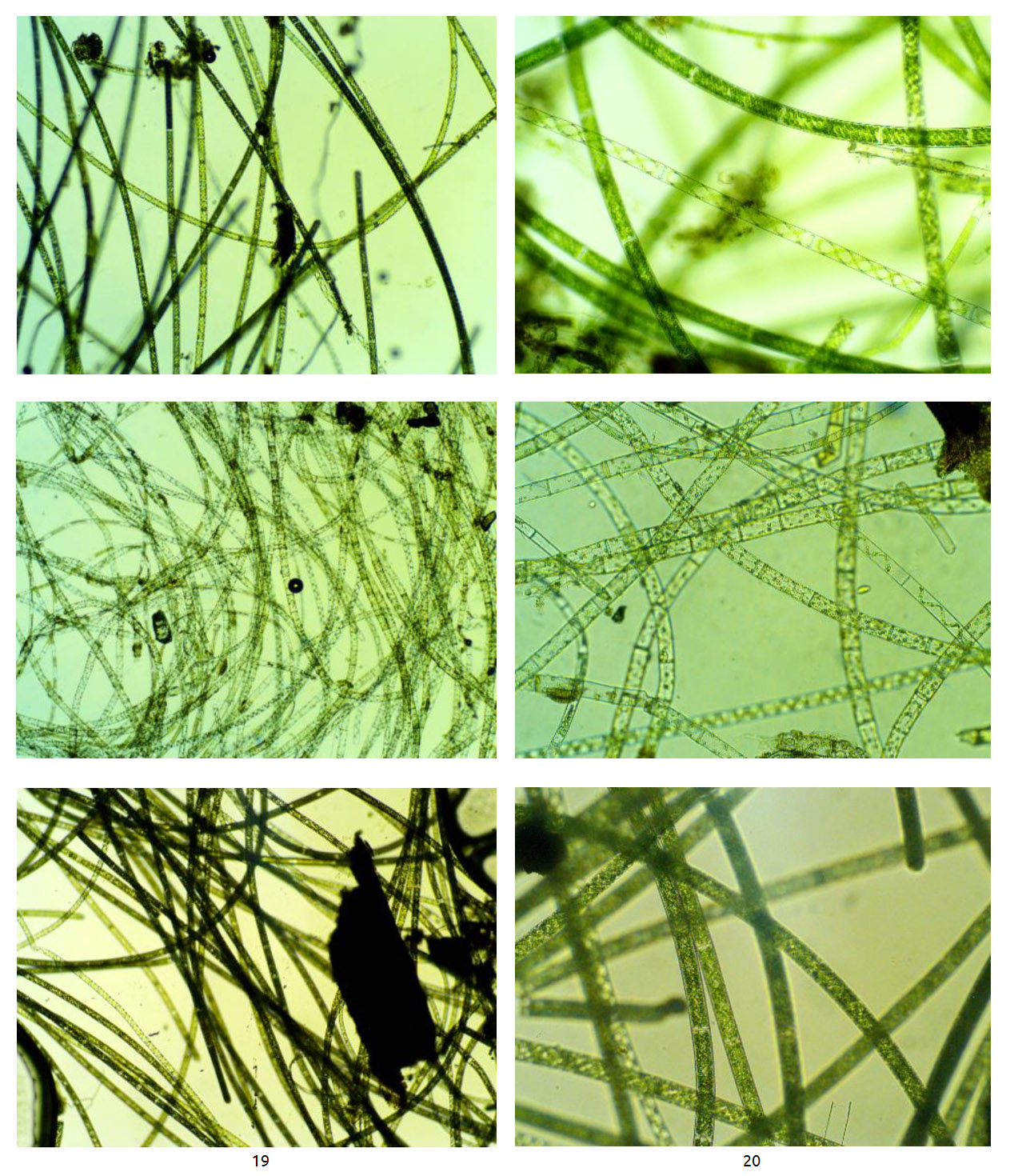
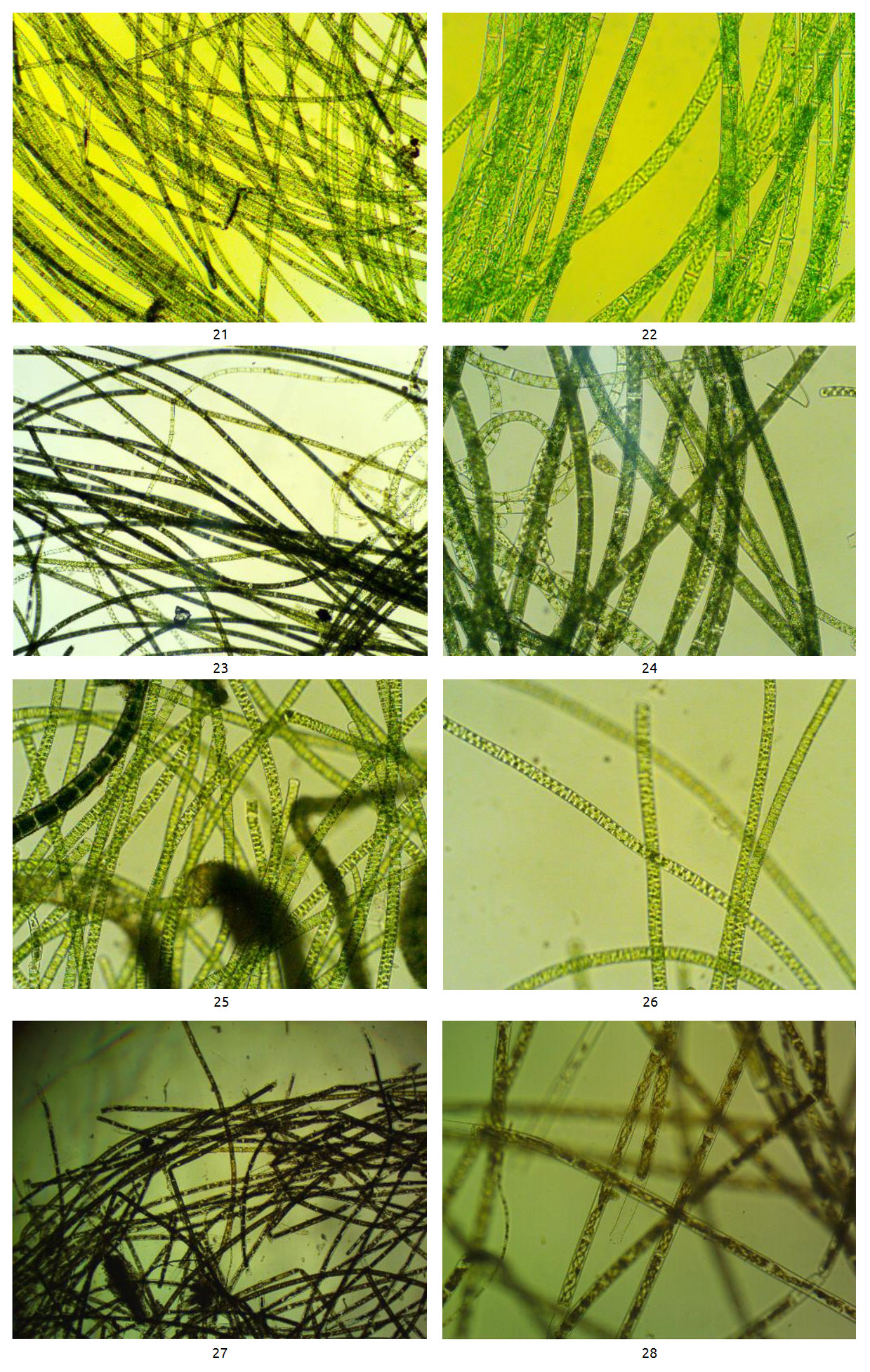
1. Phytobenthos (lead researchers DSc in Biology O.A. Timoshkin, engineer R.A. Yurgin, and senior engineer M.I. Gula). To assess the state of coastal phytobenthic communities (qualitative and quantitative composition), 211 samples were collected using the stone-unit method. Particular attention was paid to the distribution pattern and ecology of algae that are non-native to open Lake Baikal–specifically species of the genus Spirogyra–as well as certain benthic cyanoprokaryotes. Most of the samples were analyzed in vivo, and over a thousand of corresponding photographs were taken, demonstrating the species composition of microphytobenthos and occurrence frequency of various algae in the coastal zone. Examples of these photographs are provided below, focusing on sampling stations where non-native filamentous algae had proliferated extensively. Determination of quantitative characteristics shall be completed by the spring of 2027. The brief conclusions of the research are summarized as follows.
1.1. Filamentous algae of the genera Spirogyra and Oedogonium. These algae, which were not previously characteristic of open waters of Lake Baikal, continue to proliferate abundantly in many areas of the lake’s coastal zone. Specifically, they predominated in most of the samples collected at depths of 1-8 m at almost all stations of the southern basin of Lake Baikal, most stations of the northern basin, and various other sites. The most extensive Spirogyra growths were found at the following stations of the southern basin of Lake Baikal, specifically in the coastal zone opposite the following settlements and towns: Listvyanka, Slyudyanka, Babushkin, Kultuk, Sharyzhalgay, Bolshiye Koty (where dense mats were observed on pier logs), and Bolshoye Goloustnoye. In the bulk of these locations, either the so-called “fecal” Spirogyra morphotype predominated, indicating domestic sewage pollution (Timoshkin et al., 2018), or “riverine” morphotype (so-called Spirogyra morphotype 2) often with an admixture of Oedogonium species. In the central basin of Lake Baikal, the development of Spirogyra was less pronounced. Filaments were occasionally detected in the samples from Aya and Shamanka (Khuzhir) bays, while sparse or non-extensive occurrences were recorded in the samples from Cape Nyurgon (from the shoreline to a depth of 3 m), Cape Izhimey, Maksimikha settlement (Barguzin Bay)– dense at a depth of approximately 3 m and rare at depths of 0.5–1.5 m. In the northern basin of Lake Baikal, the extensive Spirogyra proliferation was recorded in samples from the following stations: opposite the Tompuda settlement, in the shallow waters of Ayaya, Frolikha, and Senogda bays, opposite the Zarechny settlement (Severobaikalsk town), as well as capes Muzhinayskaya Kovrizhka and Elokhin. These findings indicate that destructive processes of dominant algal complex displacement, when widespread filamentous algae replace endemic species, continue across many areas of Lake Baikal’s coastal zone.
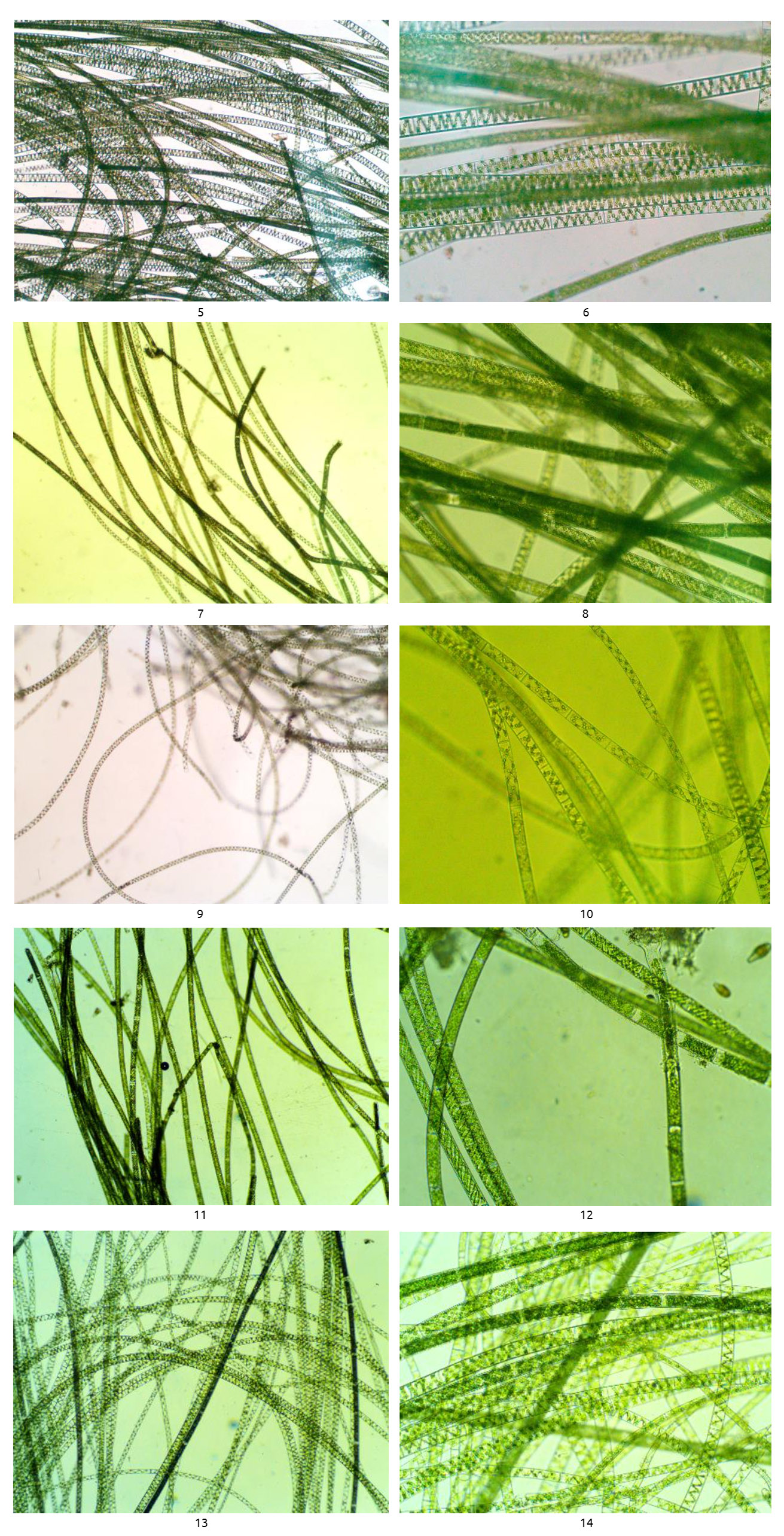
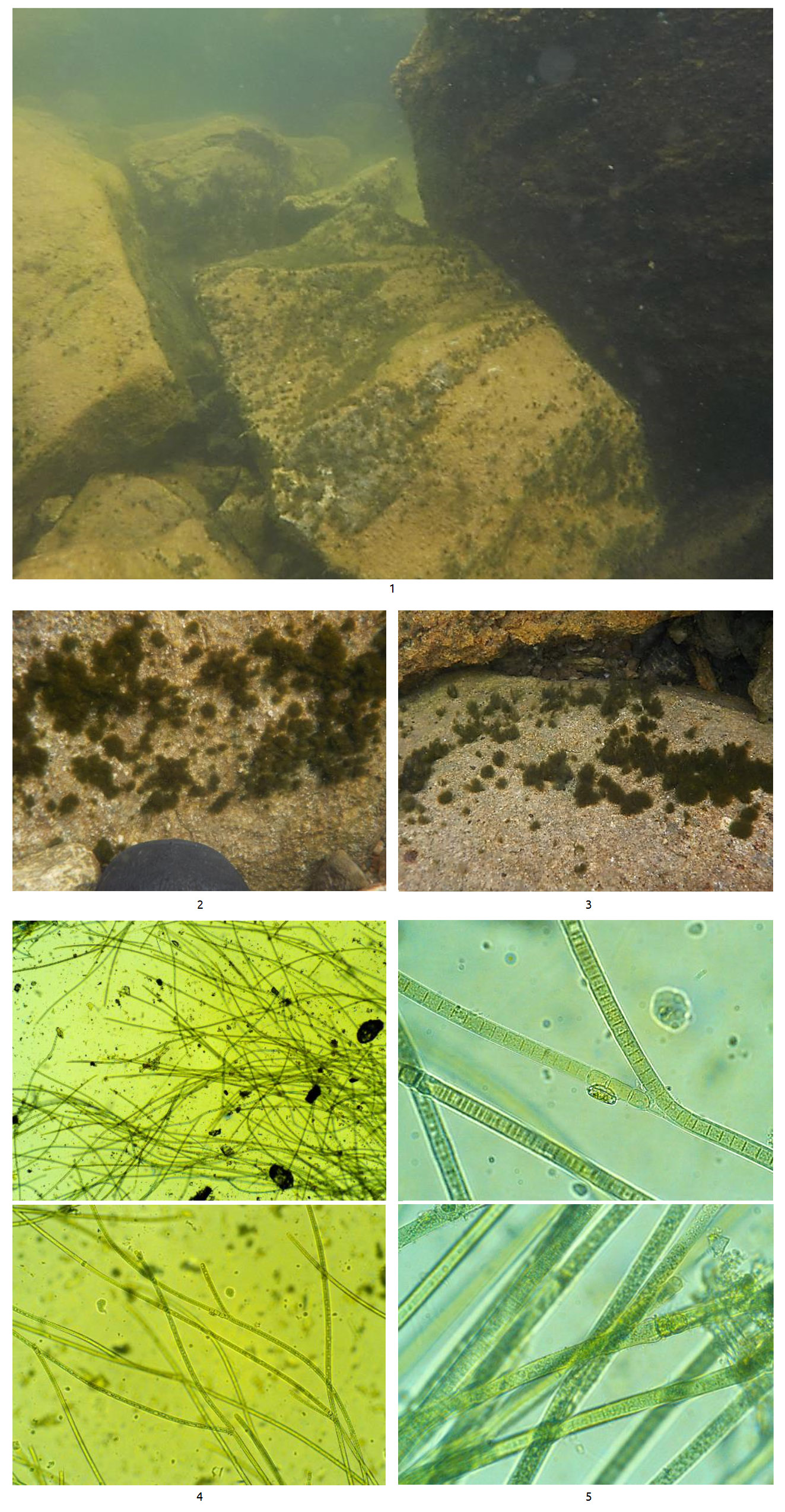
2. Benthic cyanoprokaryotes. During the expedition, we once again observed significant shifts in algal communities within the near-shore zone, concerning the extensive proliferation of cyanoprokaryotes of the genus Tolypothrix in biotopes atypical of them. These changes were particularly evident at two stations: Bolshiye Koty and Shamanka (Olkhon Island) bays (Fig. 2). Black and green patches, or even mats, of these cyanoprokaryotes were found on the shaded sides of stones. Apparently, in Bolshiye Koty Bay, these cyanoprokaryotes first proliferate in the shoreline zone; subsequently, as the lake’s water level rises, they occur at depths of 10-30 cm, forming a kind of vegetation belt. Dense patches of these blue-green algae can reach 10-15 cm or more. Prior to the onset of the ecological crisis, such phenomena–specifically the extensive proliferation of Tolypothrix–had never been observed in the shoreline zone of Lake Baikal. This phenomenon was first identified and characterized in 2016 (Timoshkin et al., 2016) and was classified as one of the adverse processes associated with the ecological crisis in the lake’s coastal zone (Fig. 2). Unfortunately, in September 2026, this phenomenon was observed again in some bays.
Invertebrate biodiversity (principal investigators: junior researchers T.M. Alekseeva and R.S. Krivorotkin)
The faunal composition of microturbellaria, ostracods, harpacticoids, bathynellids, and amphipods was investigated (principal investigators: master’s student A. S. Plotnikova). Over 84 samples were collected at depths ranging from 0.1 m to 90 m for morphological and molecular biological analysis of these groups. The study revealed members of new ostracod species endemic to Lake Baikal, which belong to the genera Cytherissa and Candona, as well as rare and poorly studied microturbellaria species of the family Rhynchokarlingiidae, harpacticoids of the genera Bryocamptus, Moraria, and Morariopsis, and bathynellids. Plotnikova A.S. collected amphipod specimens from five families (Gammaridae, Acanthogammaridae, Pallaseidae, Carinogammaridae, and Macrohectopodidae) and 17 genera (Crypturopus, Eulimnogammarus, Gammarus, Micruropus, Odontogammarus, Ommatogammarus, Acanthogammarus, Brandtia, Carinurus, Hyallelopsis, Paragarjajewia, Pallasea, Poekilogammarus, Parapallasea, Echiuropus, Gmelinoides, and Macrohectopus), and over 30 species.
Phytoplankton (principal investigator DrSc in Biology N.A. Bondarenko)
During the expedition, 42 phytoplankton samples were collected from the coastal and pelagic zones of the lake. Preliminary analysis of the samples indicated that phytoplankton levels in 2026 were sparce, with low biomass ranging from 30 to 130 mg/m³. Fragments of summer-associated cyanoprokaryotes of the genera Microcystis and Dolichospermum, as well as small cryptophyte and haptophyte algae, were recorded. Large algae, such as members of the Baikal-complex diatom, Cyclotella minuta, and the dinoflagellate, Ceratium hirundinella, were minor. Only the Asterionella formosa diatom reached significant abundance, exceeding 30,000 cells/L in the lake’s northern basin. In terms of both composition and quantitative characteristics, autumn-associated phytoplankton in 2026 was typical of this season in the current century, but it differed from the community structure of the previous century regarding the quantitative development of large diatoms belonging to the Baikal complex. In the past century, two large diatoms (Cyclotella minuta and Aulacoseira islandica) from the Baikal complex dominated the autumn-associated phytoplankton.
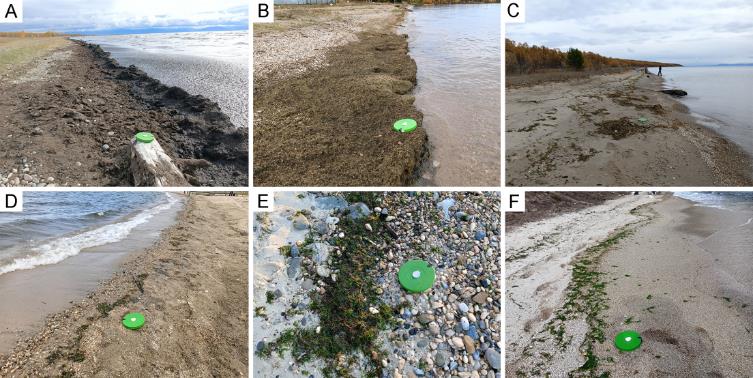
Shoreline detritus accumulations (SDA, fig. 3) (sampling and preliminary reporting: T. M. Alekseeva and R. S. Krivorotkin; principal investigators: CandSc in Biology A. V. Nepokrytykh and DrSc in Biology O. A. Timoshkin).
Large accumulations of aquatic vegetation washing up on beaches typically indicate a certain eutrophication degree of a specific area and normally lead to secondary pollution of the coastal waters. In September 2026, SDA were observed at 8 stations of the 25 sites investigated. Approximately 30 samples were collected to determine the qualitative and quantitative composition of these SDA, as well as the patterns of their distribution. These samples are currently being processed. The largest accumulations were found near the Zarechnoye and Maksimikha settlements. SDA were also recorded near the Kultuk and Sakhyurta settlements, as well as Aya, Severnaya (Bolshoy Ushkany Island), Frolikha, and Senogda bays. Samples were collected to examine their composition and quantitative characteristics under laboratory conditions.
Microbiology (principal investigator CandSc in Biology V.V. Malnik).
Samples were collected at 30 station along the coastal zone of the entire Lake Baikal (in all three basins). Overall, 129 samples, including 10 samples from rivers, 65 samples from the surface of Lake Baikal, 29 sample from the bottom of the lake, and 25 interstitial samples. According to the established standards (SanPiN 1.2.3685-21), the concentrations of Escherichia coli and fecal enterococci must not exceed 100 CFU/100 mlL and 10 CFU/100 mL, respectively. The study results indicate that 4 out of 10 river samples (40%), 16 out of 65 Lake Baikal surface samples (~25%), and 6 out of 29 bottom-layer samples from the lake (21%) did not meet these standards. E. coli and enterococci significantly exceeded the standards at the following sampling sites: 1) Pokhabikha River–surface sample (50 m downstream from a wastewater discharge pipe): 6300 CFU/100 mL and 2800 CFU/100 mL, respectively; 2) Malaya Cheremshanka River–surface sample (at the river mouth, before entering Lake Baikal): 2300 CFU/100 mL and 680 CFU/100 mL, respectively; 3) Aya Bay–surface sample: 500 CFU/100 mL and 168 CFU/100 mL, respectively. 4) Sakhyurta settlement–surface (1 m from the shoreline): 664 and 246 CFU/100 mL, respectively; 5) Khuzhir settlement–surface (1 m from the shoreline): 257 and 97 CFU/100 mL, respectively.
All collected material is stored in the following LIN SB RAS laboratories: Aquatic Invertebrate Biology, Aquatic Microbiology, and Hydrochemistry and Atmosphere Chemistry; the bulk of the material is currently undergoing processing.