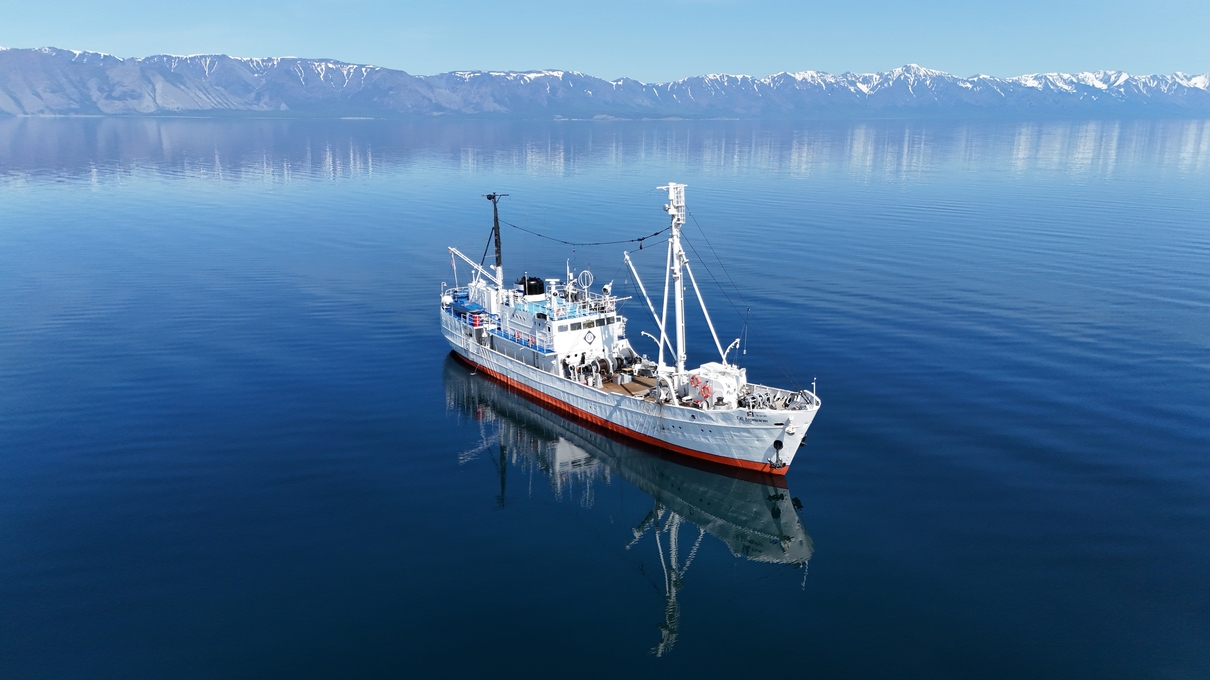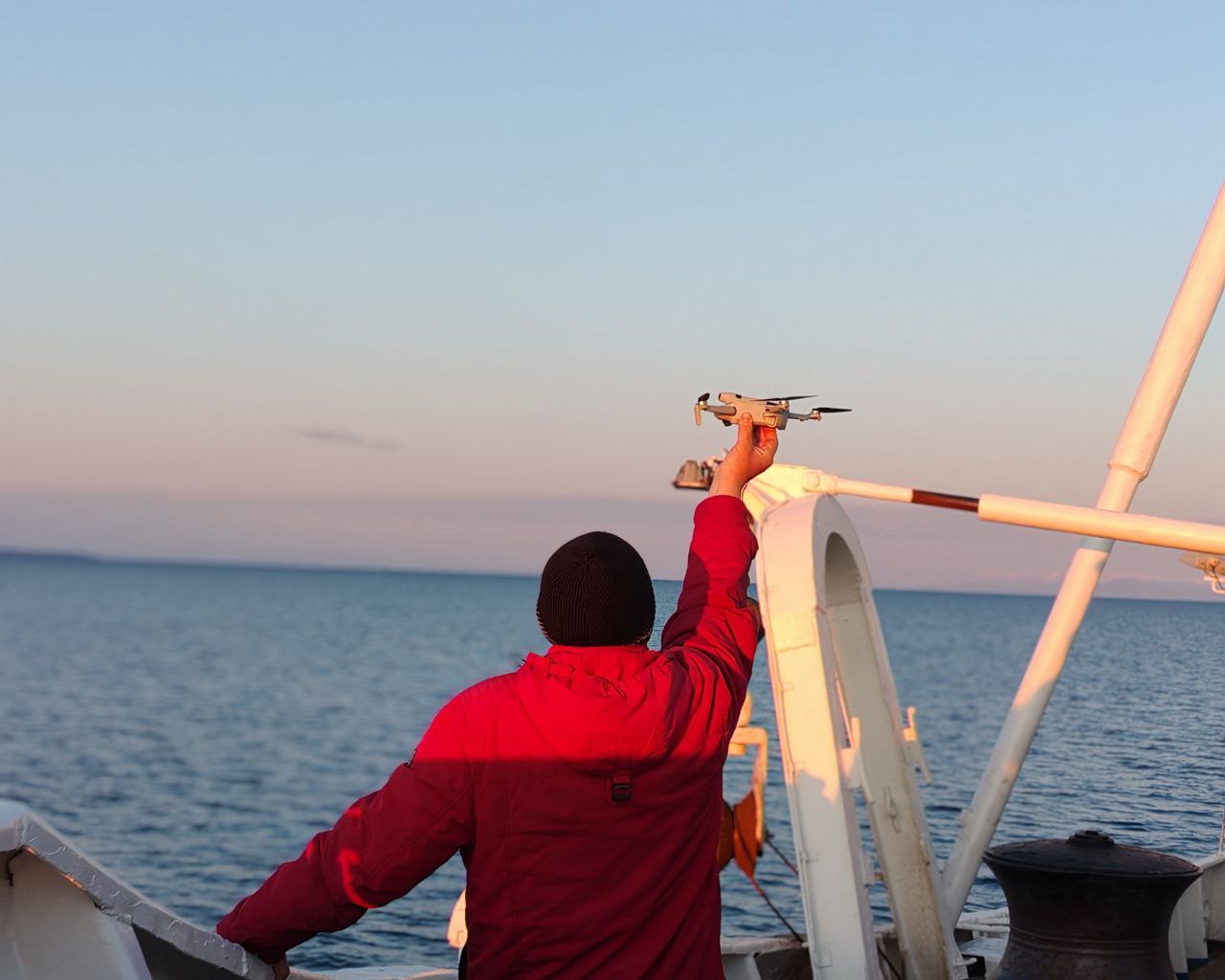



Complex Circum-Baikal expedition on R/V Vereshchagin from May 28 to June 11, 2025
From May 28 to June 11, 2025, field works were carried out throughout the whole Baikal water area on R/V G.Yu. Vereshchagin within the State Assignments No. 0279-2021-0004 “Study of advective and turbulent water exchange... (led by Aslamov I.A.), No. 0279-2021-0006 Studies of functioning of hydrate, oil and gaseous hydrocarbon systems... (led by T.I. Zemskaya, O.M. Khlystov), No. 0279-2021-0015 Studies of viral and bacterial communities… (led by Belykh O.I.)., No. 0279-2022-0004 Assessment of environmental and economic aspects… (led by Makarov M.M.), and No. 0279-2019-0005 Study of transformations of the state of water bodies... (led by A.P. Fedotov).
The purpose of the expedition was to continue comprehensive studies of the abiotic and biotic components of the Baikal ecosystem to identify the patterns of their spatio-temporal dynamics and to investigate experimentally the mechanisms and processes influencing the circulation and distribution of matter in the water column.
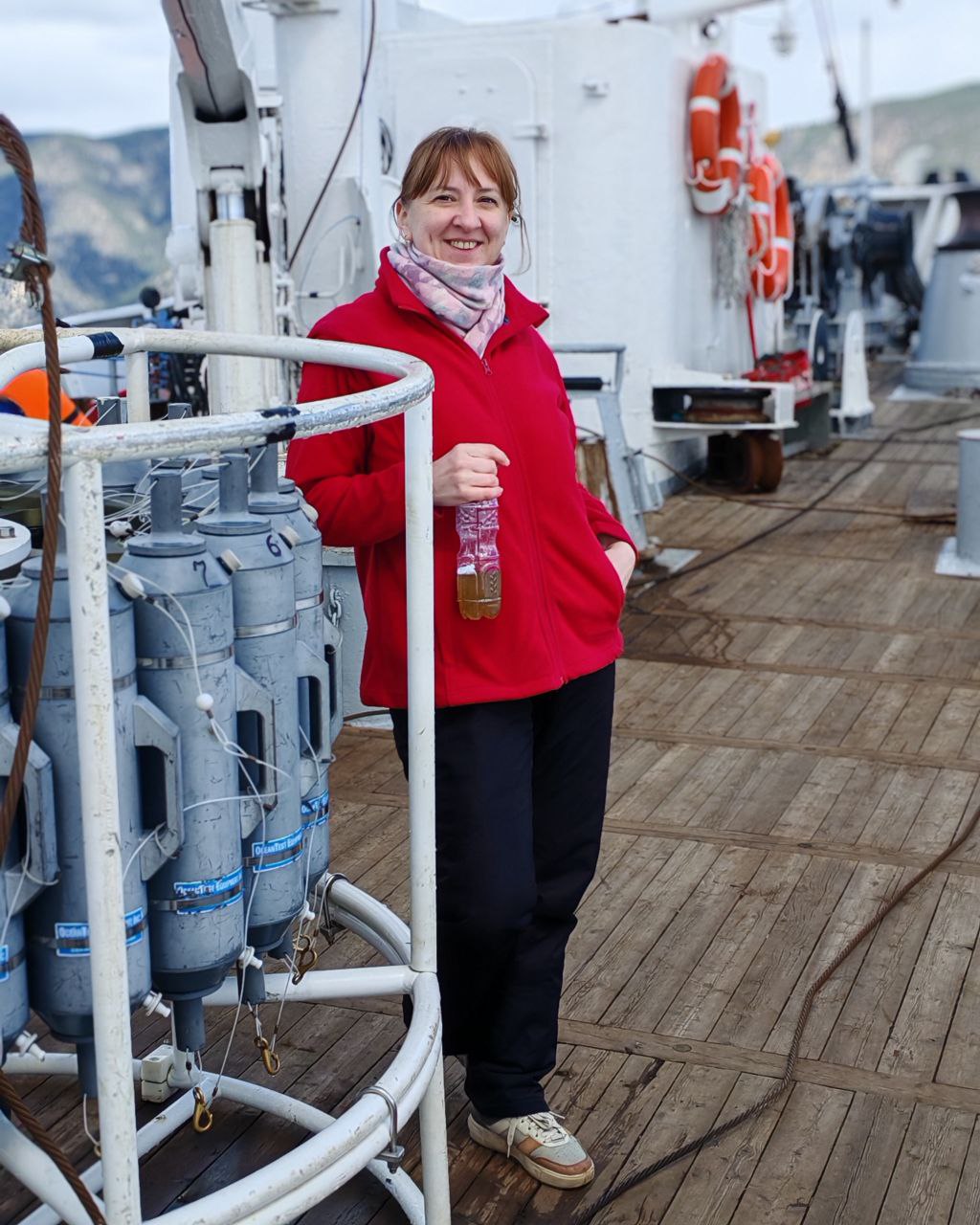
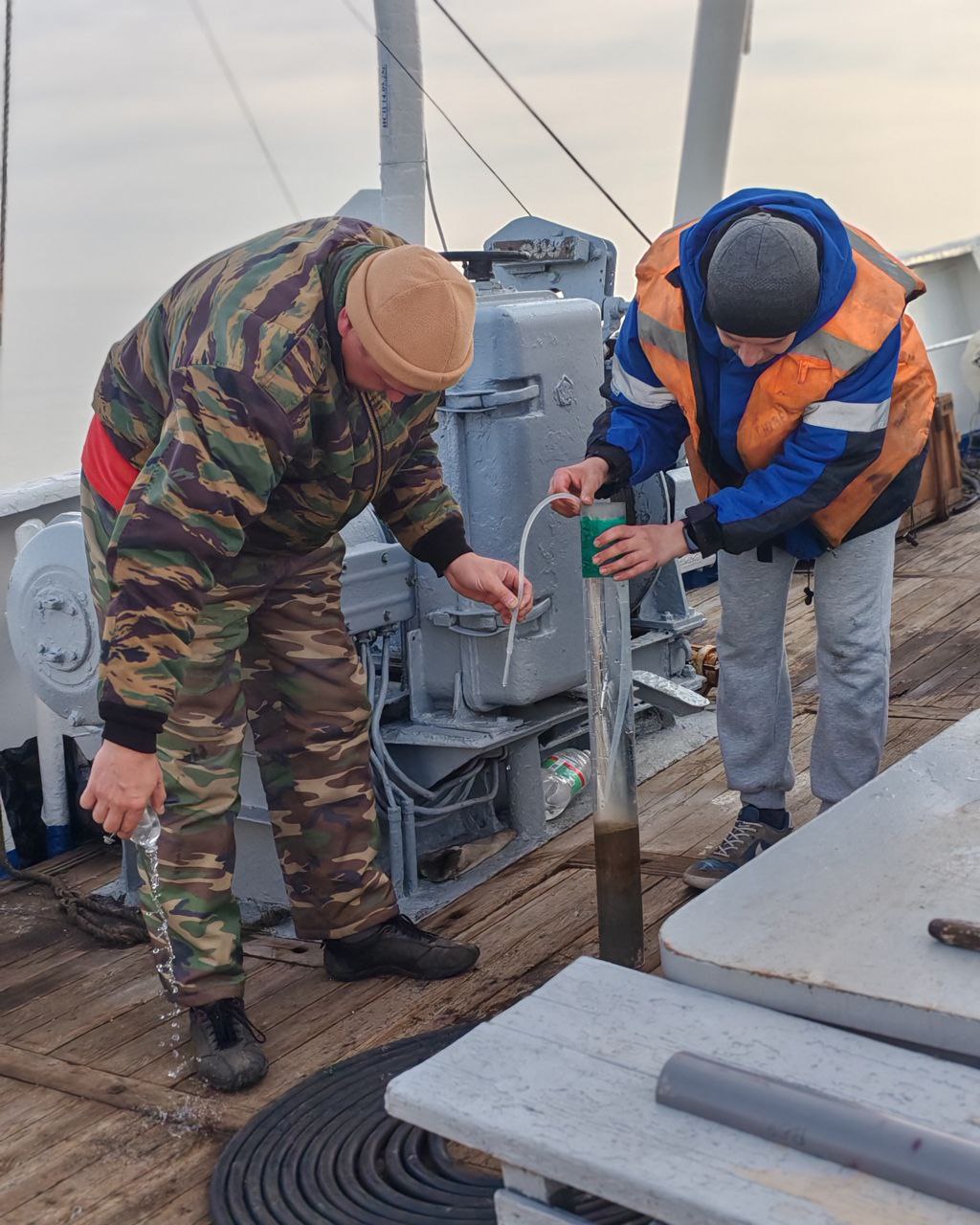
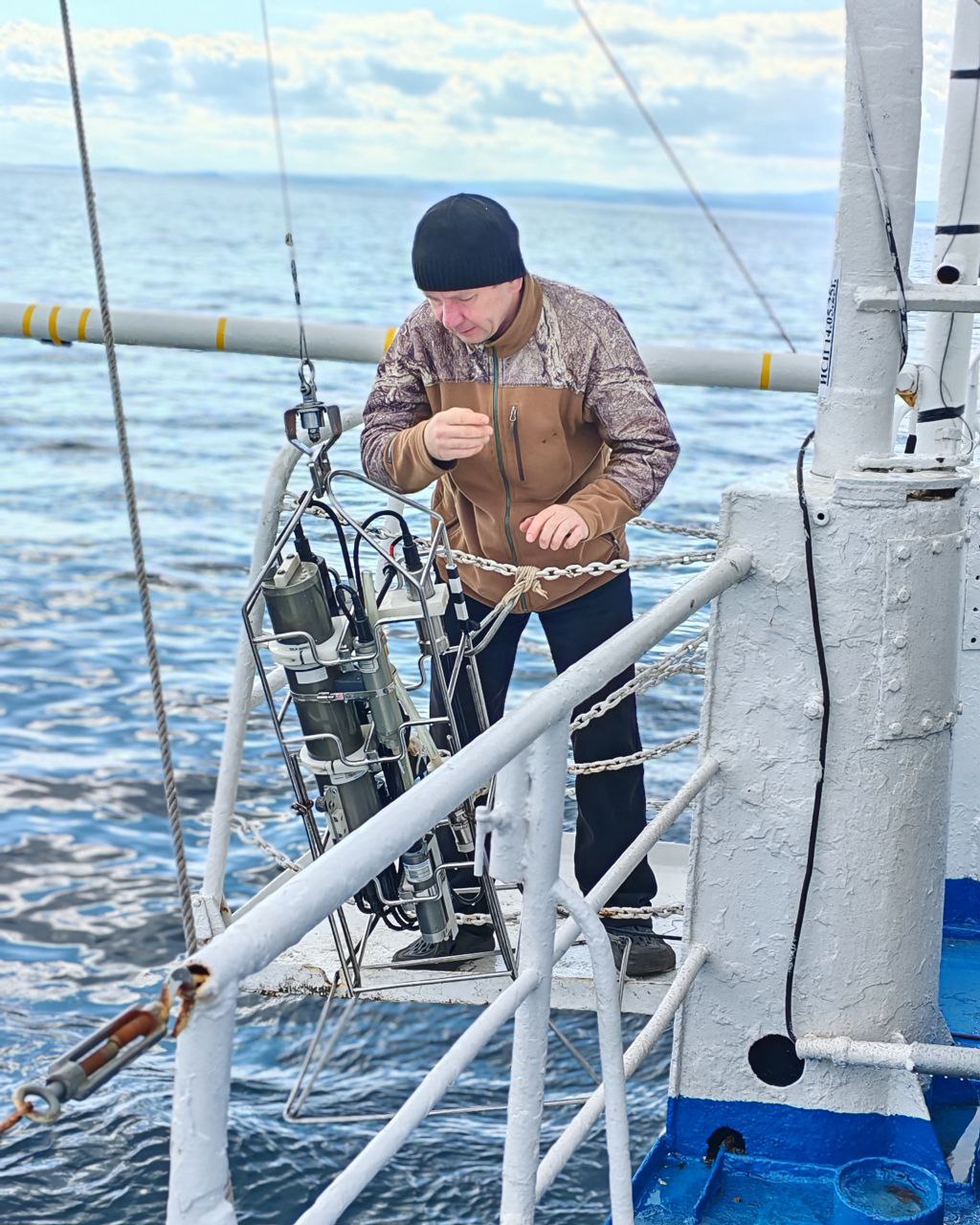
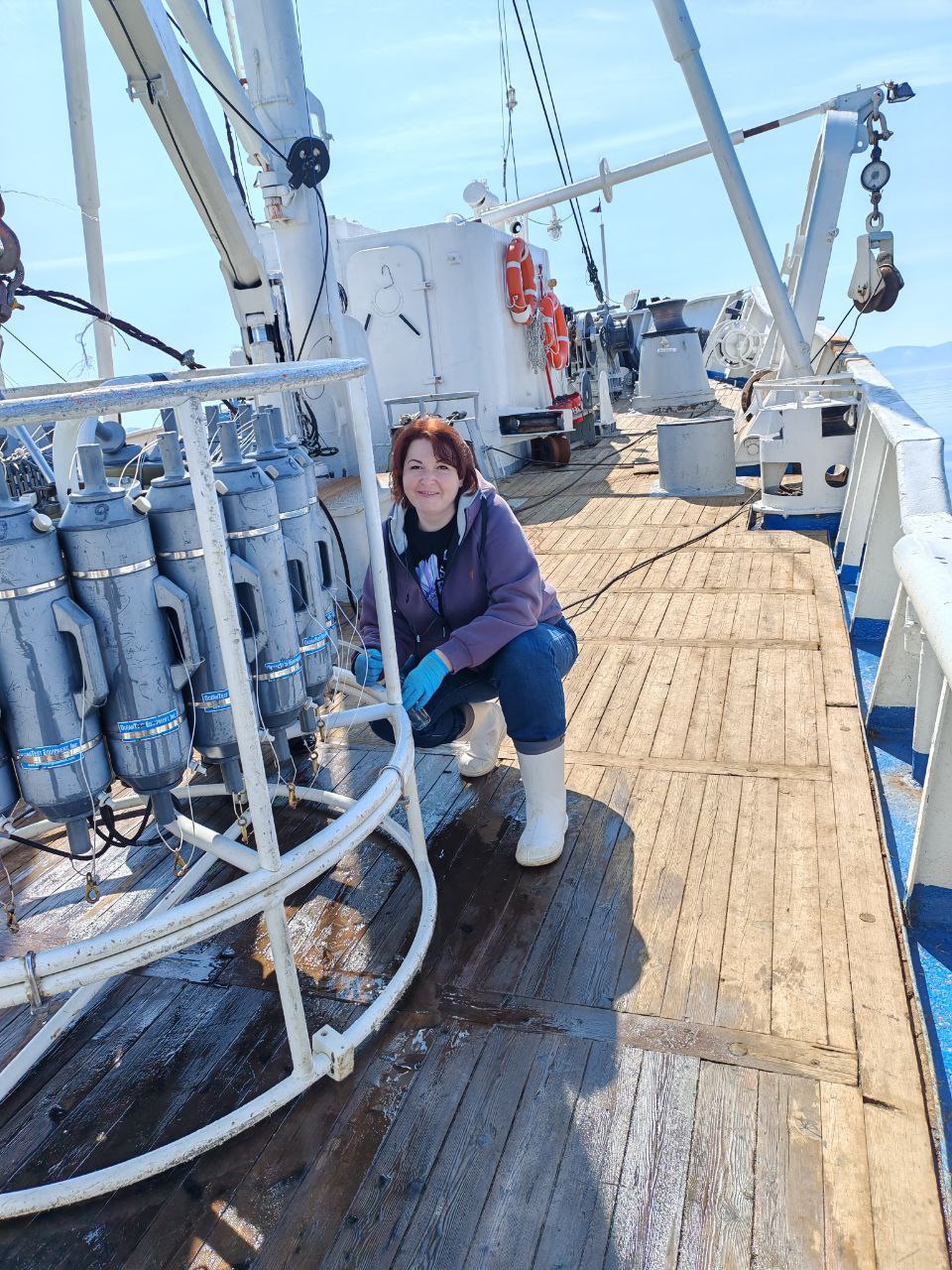
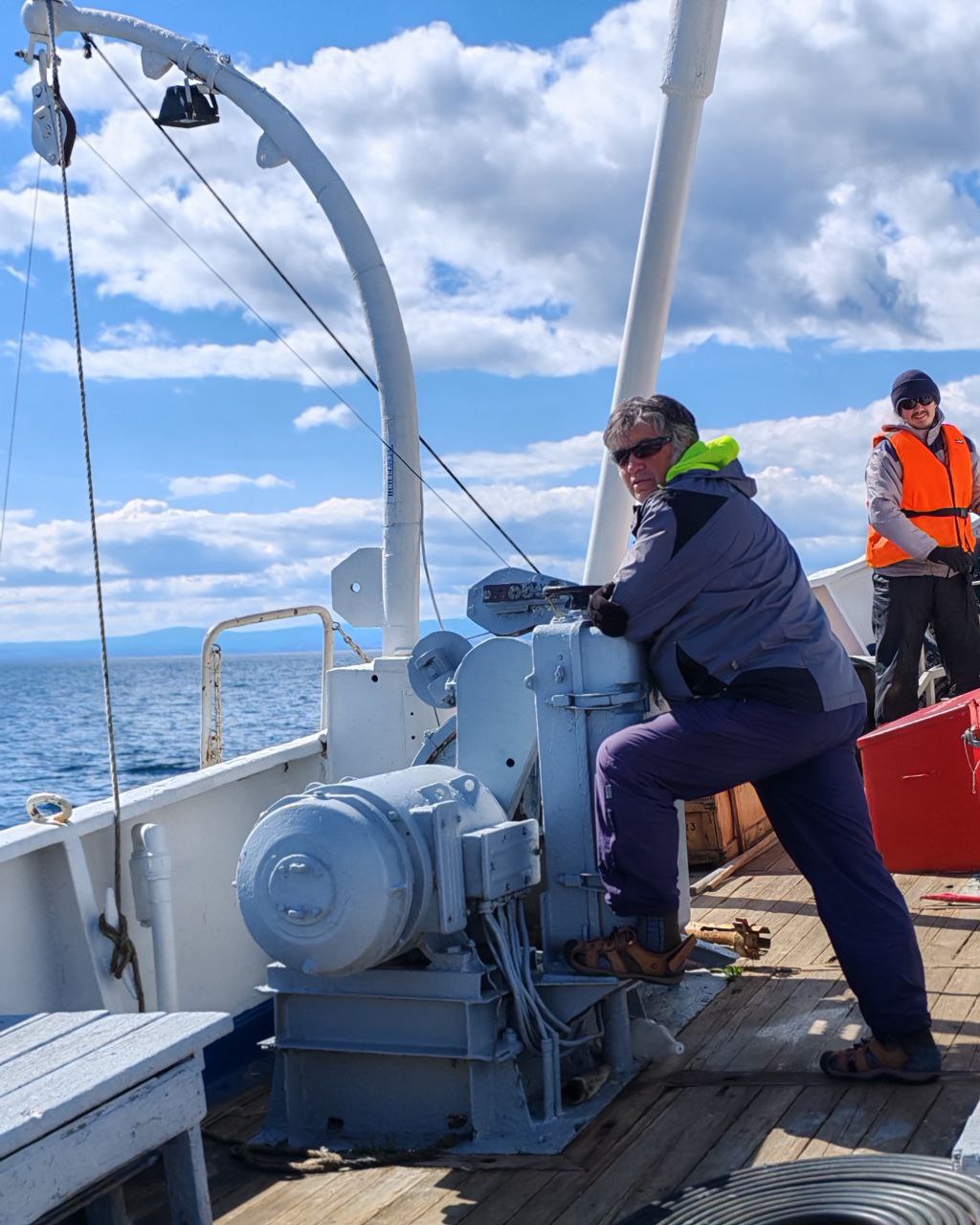
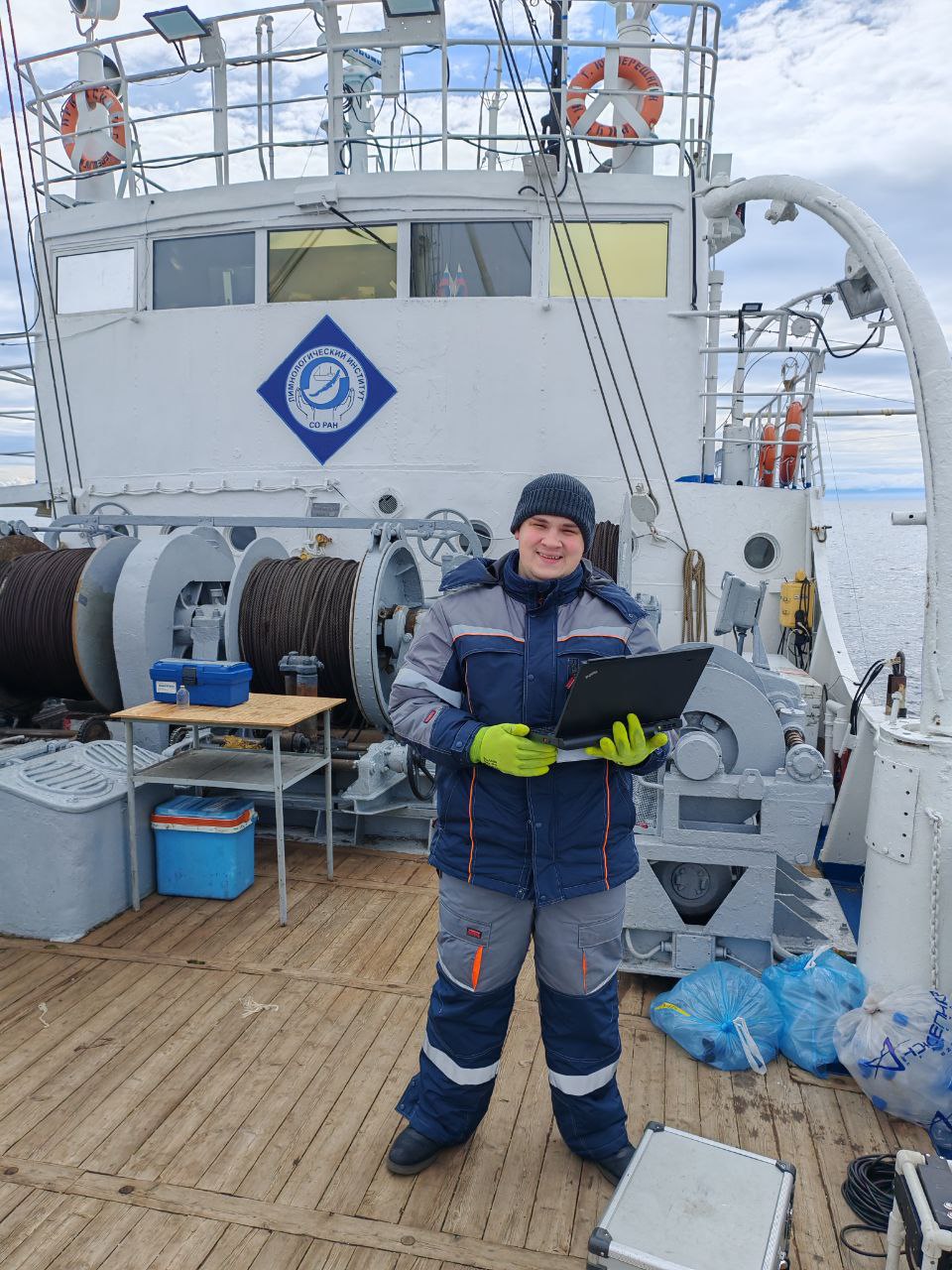
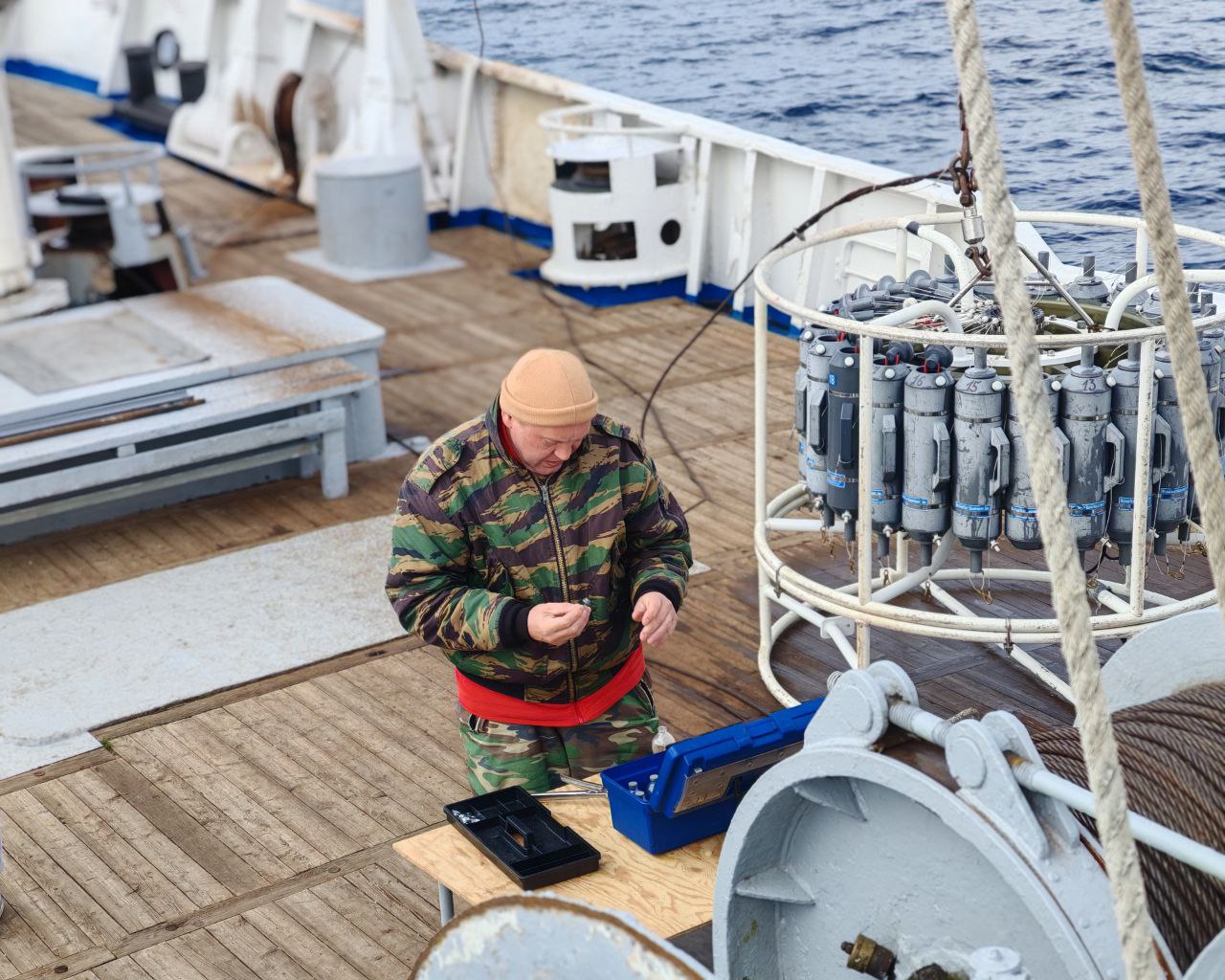
During the expedition, according to the standard grid of stations of longitudinal and transverse sections of the lake, samples were taken on fixed horizons from surface to bottom using a Carousel SBE-32 cassette-type sampler equipped with 24 5-liters bathometers. Water samples were taken to analyze the chemical and gas composition, as well as to study the distribution and species composition of phytoplankton and determine sanitary-microbiological indicators. Phytoplankton samples were taken by an Apstein net for further analysis on a scanning electron microscope, detection of ultrastructural pecularities of diatoms in the natural population and study of the stoichiometric composition (C: N: P) of seston. A Juday net was used to collect layer-by-layer samples of zooplankton up to a depth of 250 meters. Pore water samples were collected in bottom sediments and in the thin bottom layer to determine the concentration of dissolved methane at 40 stations. Work was carried out in three basins of the lake, and in Barguzinsky, Chivyrkuy bays and in Maloye More Strait. Water was sampled using a Juday net at 32 stations. Besides, water samples for hydrochemical and microbiological analysis were taken at the mouths of 8 rivers Goloustnaya, Buguldeyka, Anga, Turka, Barguzin, Tompuda, Rel and Kichera. Hydrophysical measurements were carried out at 63 stations with high-precision CTD probes SBE-25 and JFE Rinko with additional sensors for dissolved oxygen, transparency, turbidity, pH and ORP. In the South Basin, additional measurements of chlorophyll concentration were performed with a multichannel immersion fluorimeter.
On the way of the vessel, a permanent record was made of the temperature, pH and electrical conductivity of surface waters, the main meteorological parameters, the concentration of aerosols in the adjacent atmosphere, the incoming and reflected long- and short-wave solar radiation. Additionally, bubble gas outlets were monitored using the Echo-Baikal software and hardware complex based on the Furuno echo sounder with recording of echogram data.
- for hydrochemical analysis - 230
- for determination of dissolved methane concentration - 942
- zooplankton samples - 98
- phytoplankton samples - 52
- near-surface sediment cores – 40.